


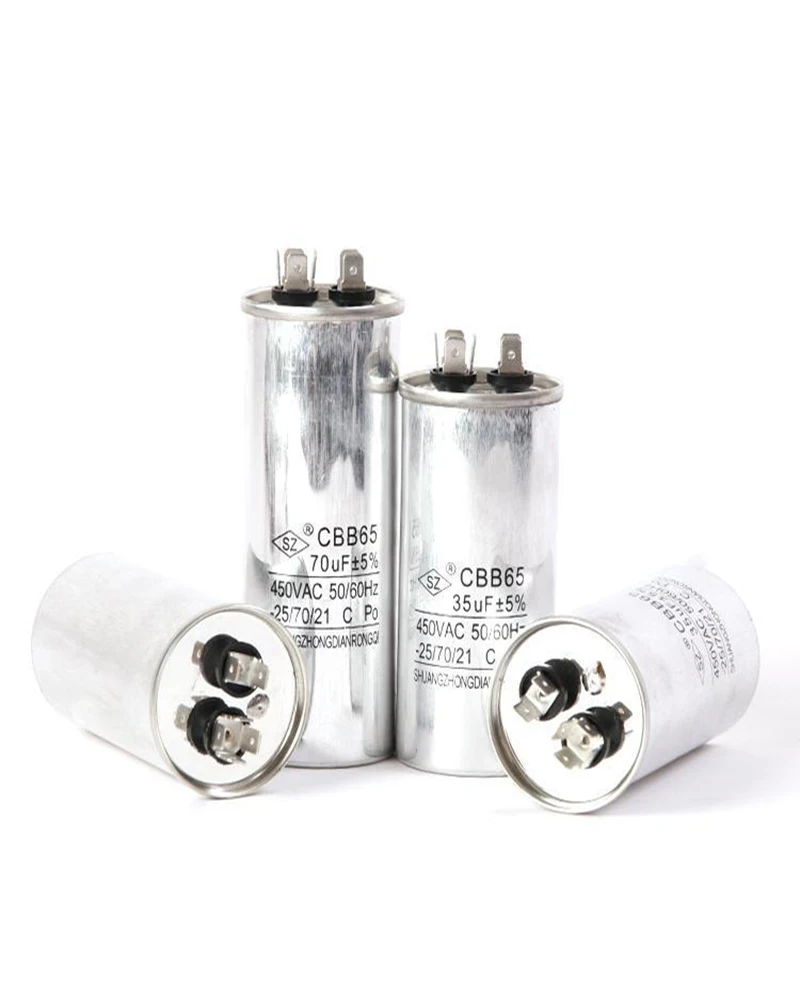
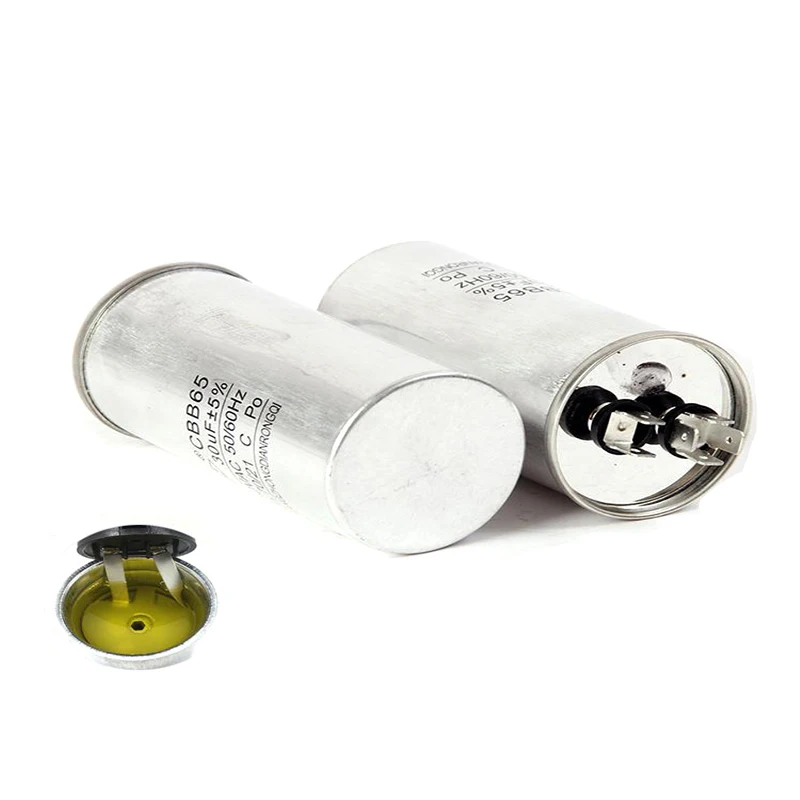
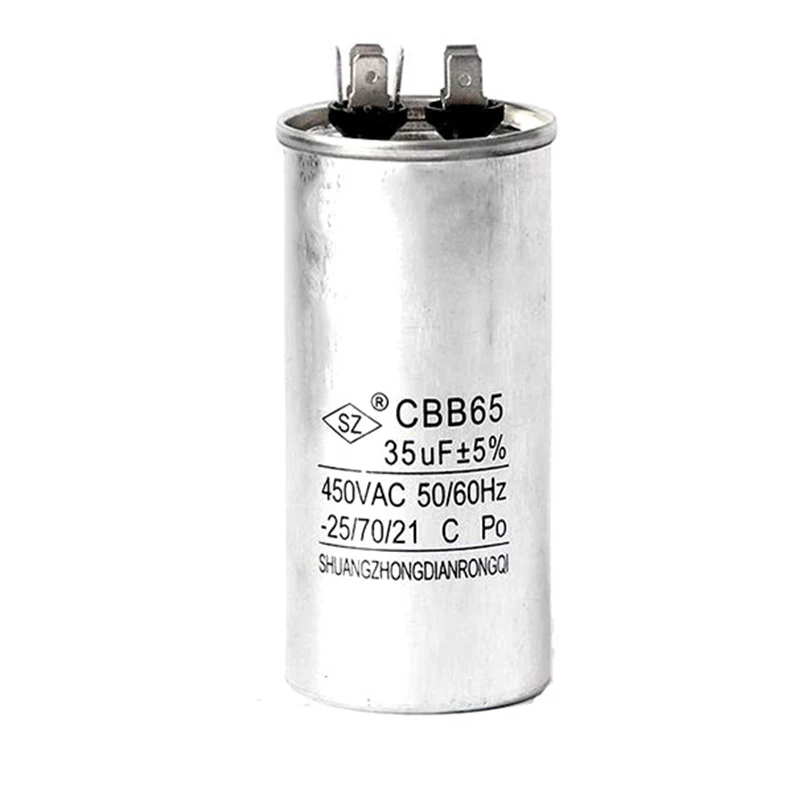
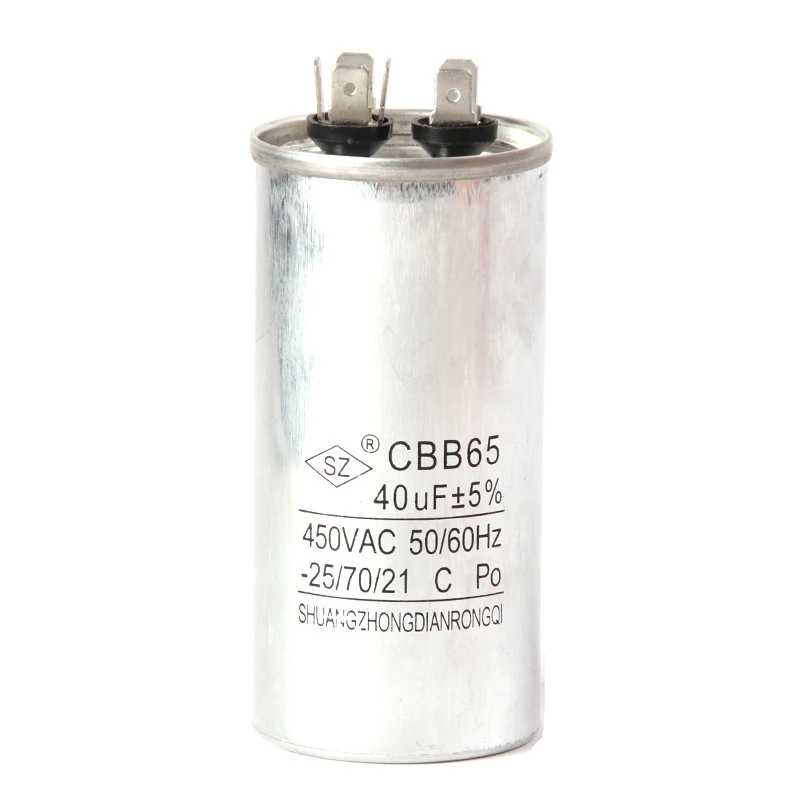




- is_customized: Yes
- Color: WHITE
- Structure: Fixed Capacitor
- Operating Temperature: -50-100℃
- Rated Voltage: -AC250V-DC450V
- Package Type: Through Hole
- Application: AC / Motor
- Model Number: CBB65 450V ±5%
- Type: Polypropylene Film Capacitor
- Origin: Mainland China
- tolerance: 5%
- lead pitch: 1mm
- Termination type: inserts
- Leader Type: Leadless
- Product Name: Compressor air conditioning capacitor
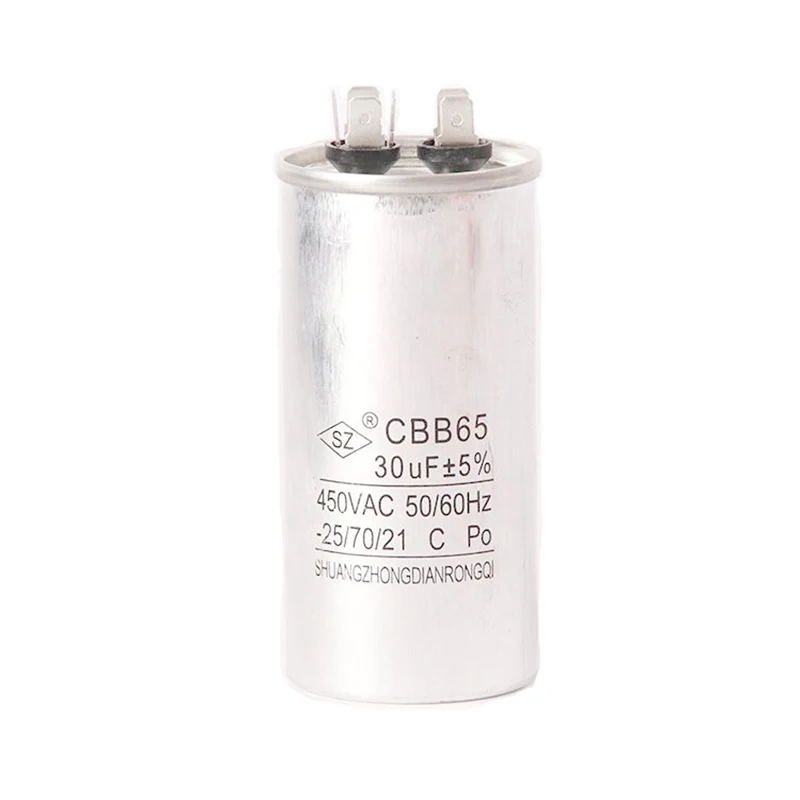
Product name: Compressor Air Conditioning Capacitor
Model: CBB65A-1 450V ± 5%
Capacity specifications: 20UF, 25UF, 30UF, 35UF, 40UF, 45UF, 50UF, 55UF, 60UF, 70UF
Capacitance characteristics:
The capacitor is made of metallized polypropylene film with thickened edges as the medium, tightly rolled by high-speed winding machine, sealed by aluminum shell, and treated under high temperature and vacuum with refined castor oil as the impregnating agent, which makes the capacitor more stable in performance and longer in life. Higher reliability.
Product Usage:
Widely used for starting and running single-phase motors powered by 50Hz/60Hz AC power sources such as household air conditioners.
Capacitor selection: A minimum of 23GW is usually 20/25UF.. 26GW 1P hang up is usually 25/30UF.. 32GW 1.25P is generally 30/35UF.. 35GW 1.5P is generally 35/40UF.. 46LW small 2P cabinet is generally 45UF 50LW 2P cabinet is generally 50UF 60LW 3P cabinet is generally 60UF 70LW large 3P cabinet is 70UF
Installation method: There are many types of capacitors, and there are also many brands. Generally, there are 4 plugs and 6 plugs. Our 6 plugs can be used interchangeably. The connection method for the 4 plugs is the same as before. For example, in the past, if the left side is connected to 2 and the right side is connected to 1, then the left side is connected to 2 and the right side is connected to 1, regardless of the positive and negative poles
Troubleshooting: This capacitor is the starting capacitor of the compressor. Generally, the compressor is not working, which is the problem. Generally, the air conditioner is not cooling, either the Freon is no longer present, or the compressor is not working. If the Freon has only been charged recently, it is usually a capacitor or compressor problem. If the external fan does not turn, it is a fan capacitor problem. Please contact customer service to send a link to the fan capacitor

Installation of starting capacitors for air conditioning
Q: How do you know the size of the capacitor used in the air conditioner at home?
Answer: Method of selecting capacitors for household air conditioners: 1P air conditioners generally use 25-30UF 1.5P air conditioners generally use 30-35UF 2P air conditioners generally use 50-60UF 3P air conditioners generally use 60-70UF
Q: Is the starting capacitor of the air conditioner divided into positive and negative poles?
Answer: When wiring air conditioning capacitors, there is no distinction between positive and negative poles
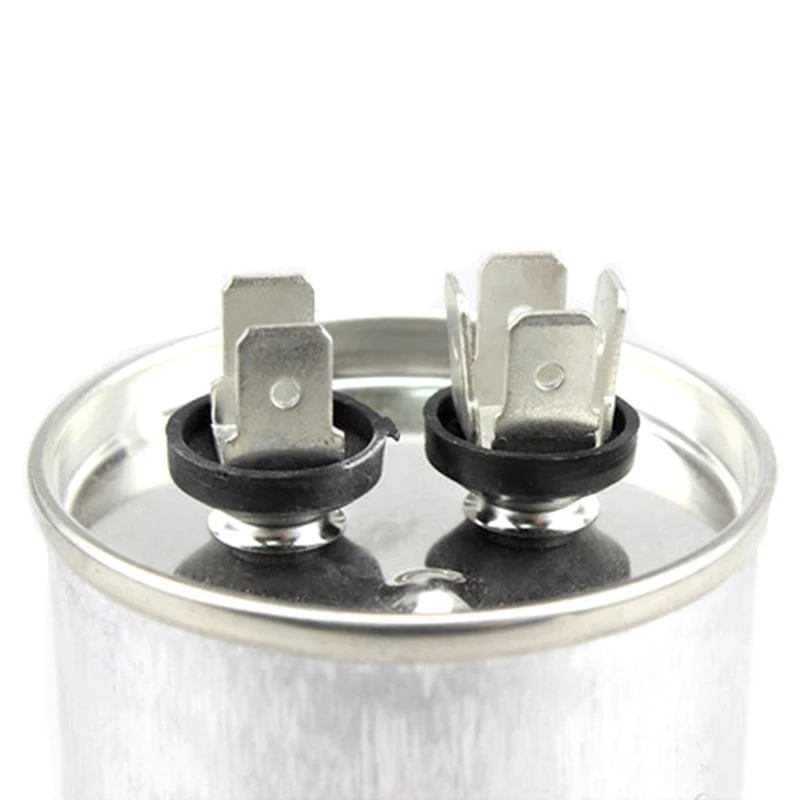
Q: There are two sides to the capacitor of the external unit of the air conditioner. One side has two legs and the other side has four legs. Why are there so many legs connected?
Answer: Actually, the pins on one side of the capacitor are all short circuited, which is equivalent to having more pins on one pin for convenient wiring


